Keep up with the latest FinTech and private market news, business tips, and thought leadership from industry leaders, mentors, and professionals.
Join our mailing list to receive information on upcoming Helicap platform updates and webinars.

If you're excited about the potential of private markets and fintech, we've got a job for you.
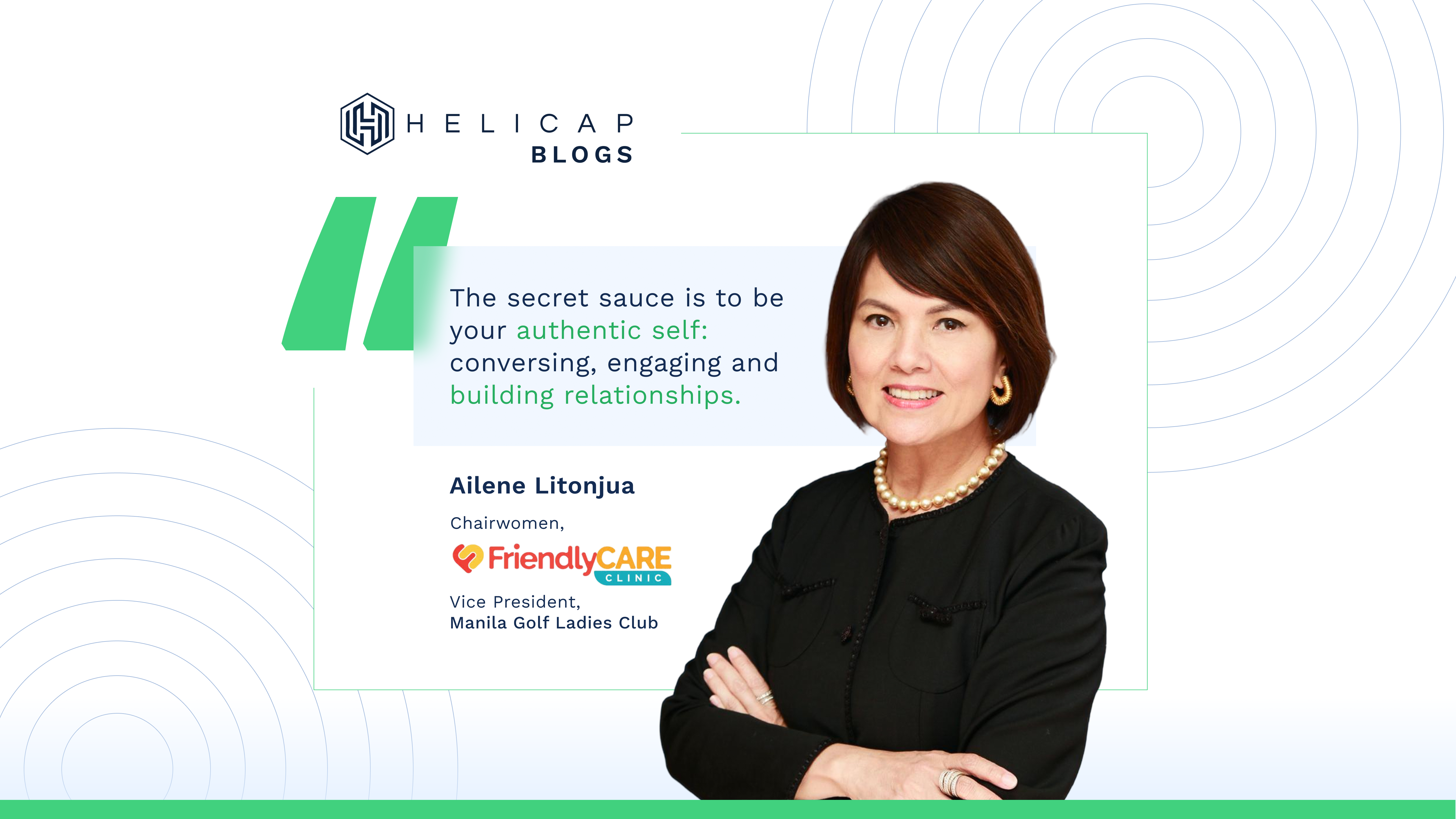
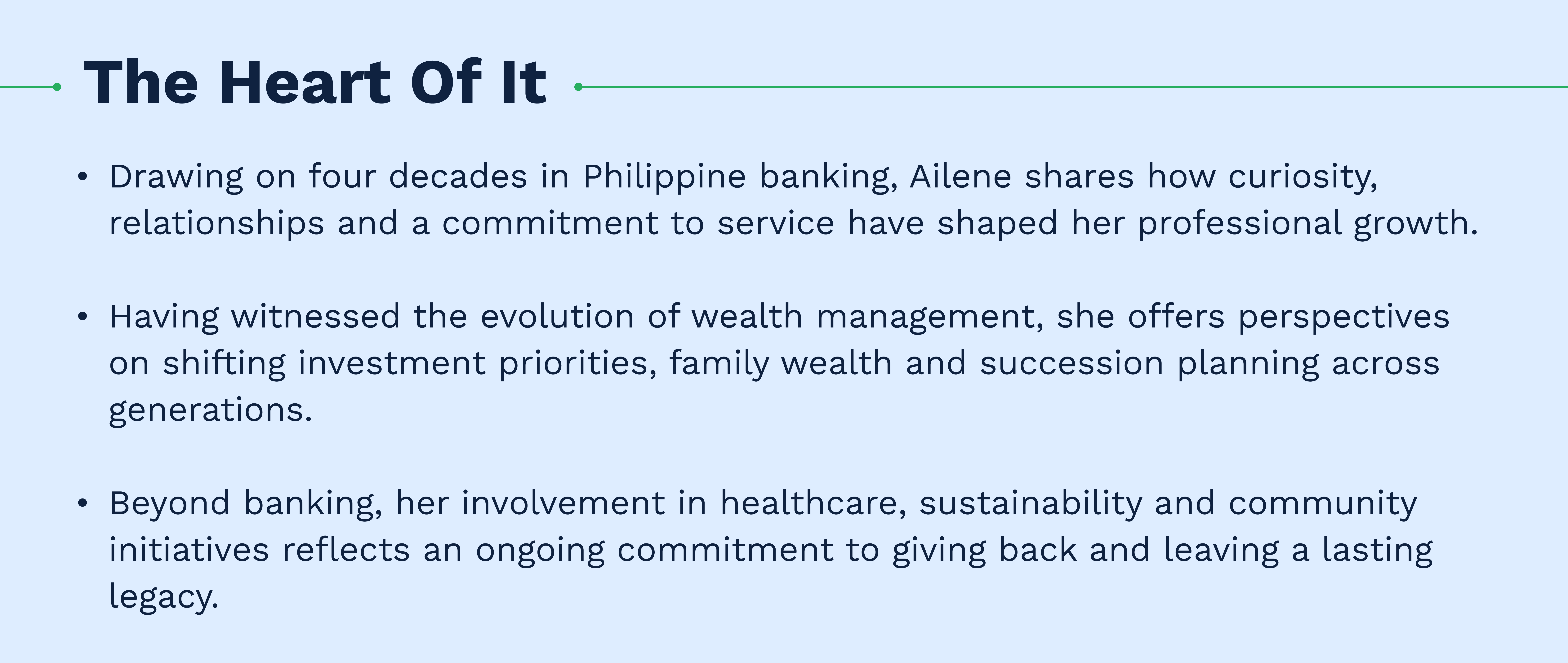
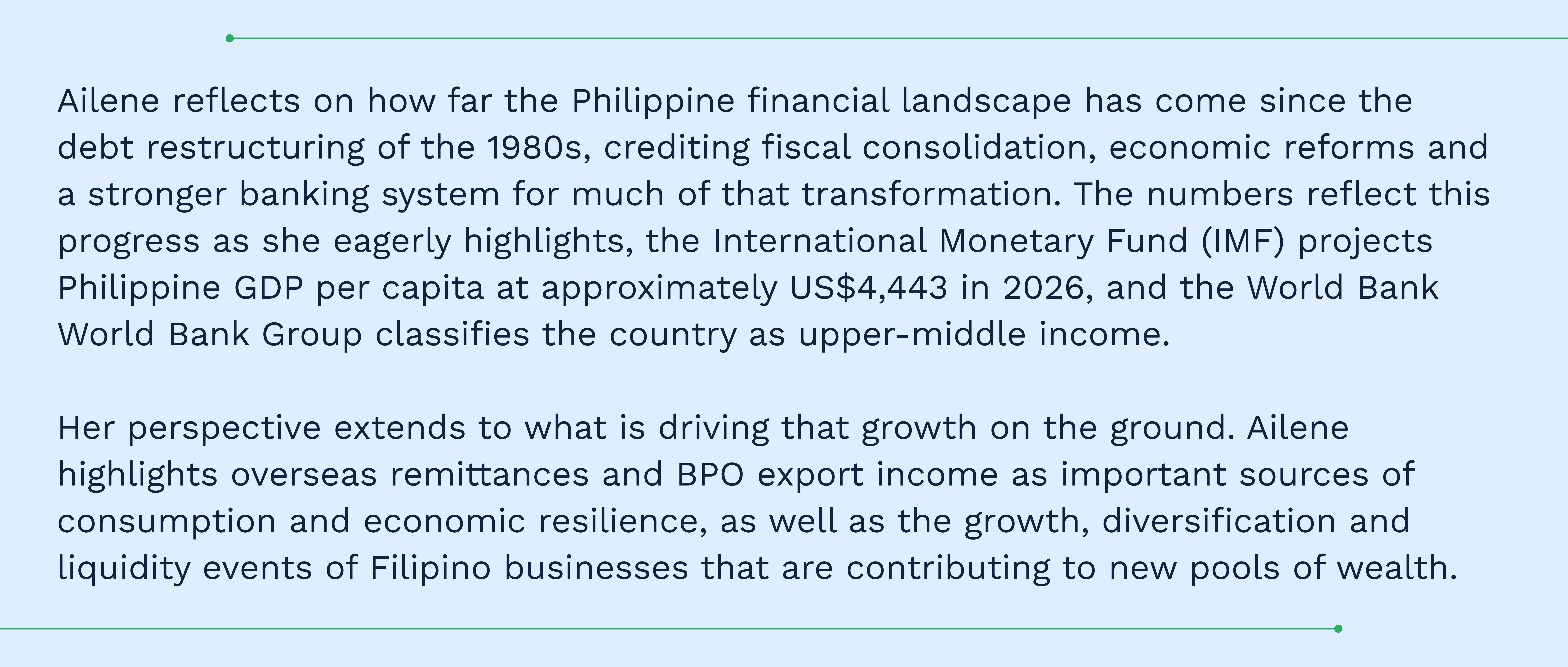
Four decades in banking offer a rare perspective on how an industry evolves, but equally, on the relationships, decisions and values that shape a career within it. For Ailene Litonjua, former Head of Private Banking at HSBC Philippines, her journey spans some of the most significant chapters in Philippine banking. The lessons extend beyond financial markets and institutions to the importance of trust, service and understanding people.
In the 11th edition of Beyond the Balance Sheet, we are honoured to spotlight Ailene, whose work across treasury, sales, investments and wealth management has given her a firsthand view of the country's changing financial landscape. Along the way, she played a key role in establishing HSBC Private Bank Suisse SA's Representative Office in the Philippines in 2008 and led HSBC Private Banking during its recognition as Asiamoney's Best International Private Bank in the Philippines in 2023.
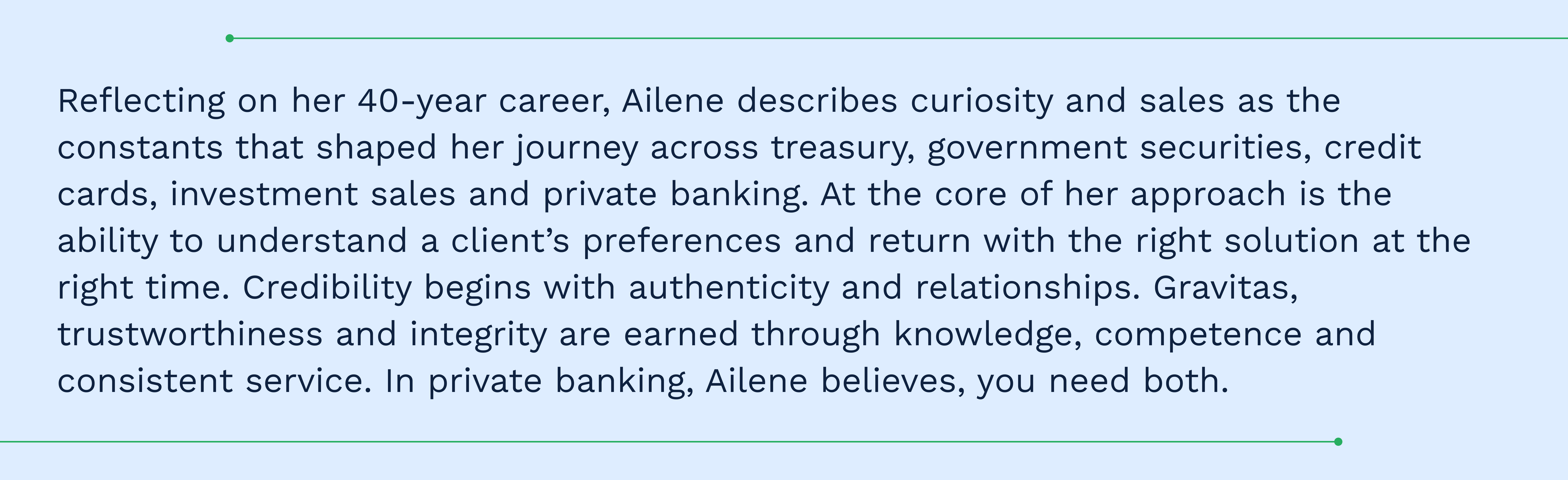
Behind these milestones lies a philosophy that has remained central to her journey: “My word is my bond.” For Ailene, credibility, gravitas, trustworthiness and integrity are qualities earned through consistent service and by putting knowledge and competence to work for the client.
Now in a new chapter, Ailene continues to apply the principles that have guided her through her career. In this feature, she looks back on the defining moments of her professional journey, shares her perspectives on the changing nature of wealth and reflects on what it means to build a legacy that extends beyond financial success.
You were instrumental in securing the Representative Office License for HSBC Private Bank Suisse SA in 2008 and overseeing it through its 2013 merger into The Hongkong and Shanghai Banking Corporation Limited's Philippine branch (HBAP). What did that process teach you about building and later consolidating regulated financial institutions in the Philippines?
The key learning is that the world of banking has become, and continues to become, highly regulated.
When I set up the Representative Office, I put in place outsourcing agreements with The Hongkong and Shanghai Banking Corporation Limited’s Philippine Branch (HBAP) to improve operational and cost efficiency. This allowed me not only to stay lean and efficient, but also to liaise with and get to know the culture and people of the broader HBAP long before the streamlining happened. Little did I know that we would eventually become one organisation, one family. Trust your instincts, go for the obvious, and always treat people fairly.
As we consolidated, the franchise took on a stronger stance because Private Banking had more resources at hand. I had the ammunition to tackle sales origination with the right profile more boldly than ever, as well as the capacity to remediate areas that needed to be revisited, with guidance from the Legal and Compliance departments. This entailed Rules of Engagement and documenting cross-border activities to ensure compliance at all times.
From a markets perspective, HSBC’s offering became more robust because we had a continuum of wealth offerings across segments, from the Premier offering in retail branches to Private Banking. Leveraging each other’s unique positions and product and service sets, depending on customers’ investable assets and needs, proved to be a very worthwhile journey.
HSBC Philippines was recognised as AsiaMoney's Best International Private Bank in 2023, during your tenure as Head of Private Banking. What do you think that recognition actually reflected about the team and client relationships behind it, rather than the institution's brand alone?
The key is for the team to be client-centric and to engage with relevance. The holistic range of services that a global institution like HSBC can offer is front and centre, but it should always form the backdrop of conversations about what is actually relevant to each client.
Understanding the client’s needs is key. Our approach was to have relationship managers across the spectrum catering to the continuum of wealth. A client might first be identified within the Premier Banking space and then brought to the Private Bank’s attention, or they might need a Premier account because they require a multi-currency account and a fast way to transfer funds between jurisdictions. That approach solidified the offering and resulted in more, and happier, customers.
There was also pioneering work around specialist needs such as Art Financing, which resulted in the first Asian Private Bank Art Financing Deal. Working both in-border and cross-border to deliver what clients were looking for is what helped us garner AsiaMoney’s Best International Private Bank Award.
Private markets are becoming a larger part of wealth portfolios globally. From a private banker's vantage point, what should clients and their families understand before allocating to less liquid asset classes?
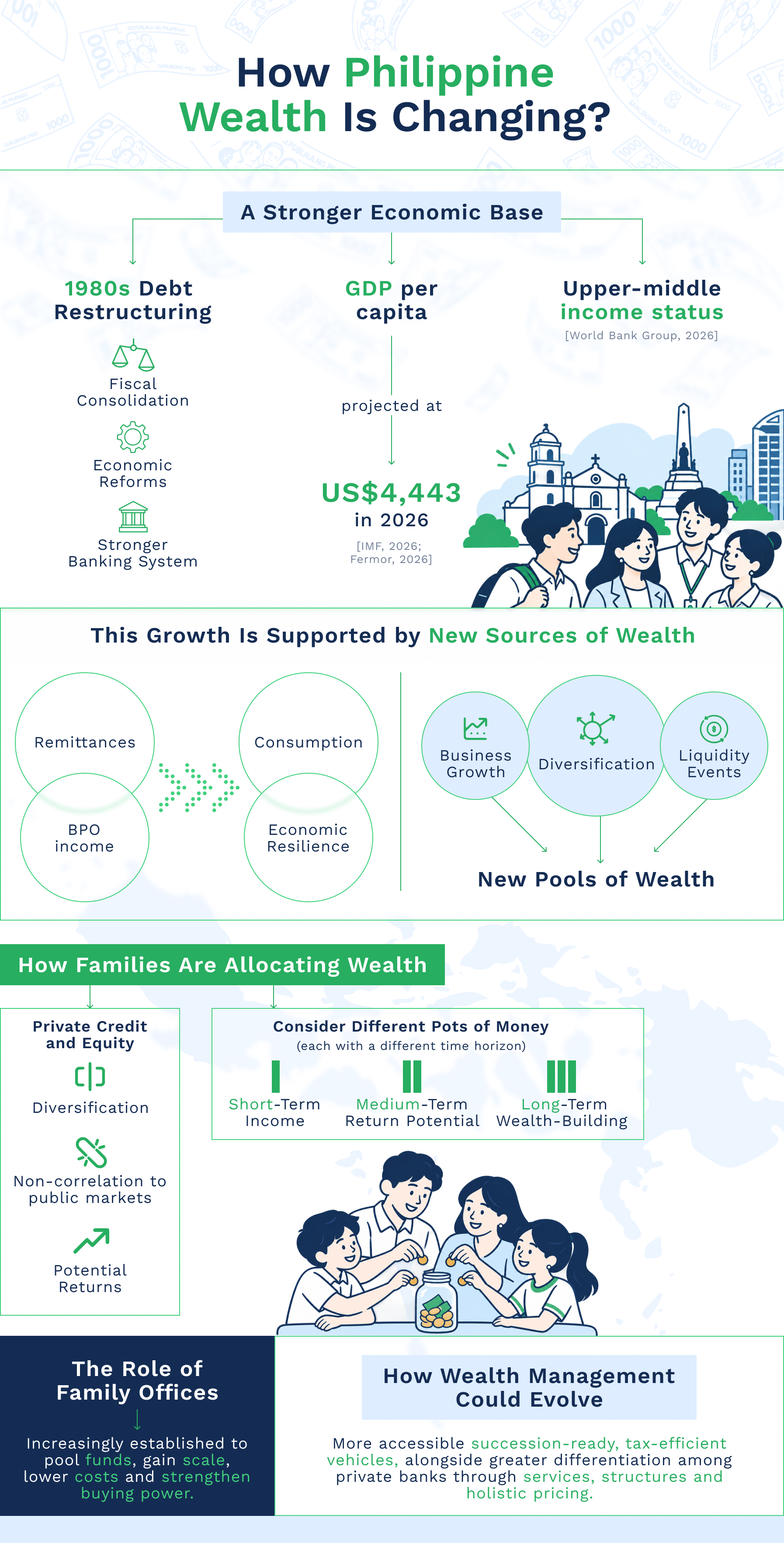
Clients need to understand the rationale behind why such investments are being made. In the case of private credit or private equity, key reasons should include diversification, non-correlation to public markets, and the potential for higher returns. One also needs to think carefully about what percentage to allocate, so that you allow the investments to work harder for you. That percentage is a function of your life stage, risk profile, and objectives for that pot of money.
Simply put, I think one should look at different pots of money in straightforward terms: one generating coupons over a short tenor, another with a medium tenor and potentially higher returns, and finally longer-duration investments designed to build wealth over time. When you plan your needs well, the appropriate percentage allocation becomes clearer. A middle executive, for example, would have different needs from a retiree in his or her 60s.
If you were to put it on a graph, with age on the x-axis and risk on the y-axis, there is an inverse relationship.
As Philippine wealth remains concentrated in family-run conglomerates, how do business families approach investing and private banking relationships, and what opportunities does this create for the industry's evolution over the next decade?
Business families and conglomerates are increasingly establishing family offices to achieve economies of scale through pooled funds, lower costs, and greater buying power when it comes to investment purchases. Looking ahead, one can imagine investment vehicles that are succession-ready and tax-efficient becoming a trend for the future. Ideally, these would not require steep minimums, so that the wealth of regular business families can be catered to more efficiently as they grow.
As the commoditisation of products continues, private banking institutions will have to differentiate themselves through the services and structures they provide, as well as the creative pricing they can offer holistically.
You've spoken about entrepreneurial clients transferring wealth and business to the next generation. What tends to make the biggest difference between a wealth transfer that goes smoothly and one that doesn't?
The Plan.
The Succession Plan not only has to be thorough enough to withstand legal challenges, but should also provide enough bandwidth across the different stakeholders. Conversations with beneficiaries and the Patriarch or Matriarch need to be iterative, and ultimately satisfying and productive for everyone concerned.
Putting these into formats that are hard-coded through Trust Documents and soft-coded through family constitutions is paramount.
How does legacy planning differ for a first-generation business owner versus a family already several generations into managing wealth?
The key is the private bank’s ability to understand the First Generation Grantor’s wishes, and then translate those wishes into the appropriate structures, documentation and procedures. If this is done well, and revisited when necessary, then the handling of wealth for the generations that follow has a high probability of being smooth.
For the management of generational wealth, continuously establishing relationships across generations is key. Constant communication with the Trustees and the Investment Advisor about what matters to the current generation, particularly in terms of bank products and services, can also determine whether the family stays with the bank or seeks out another one.
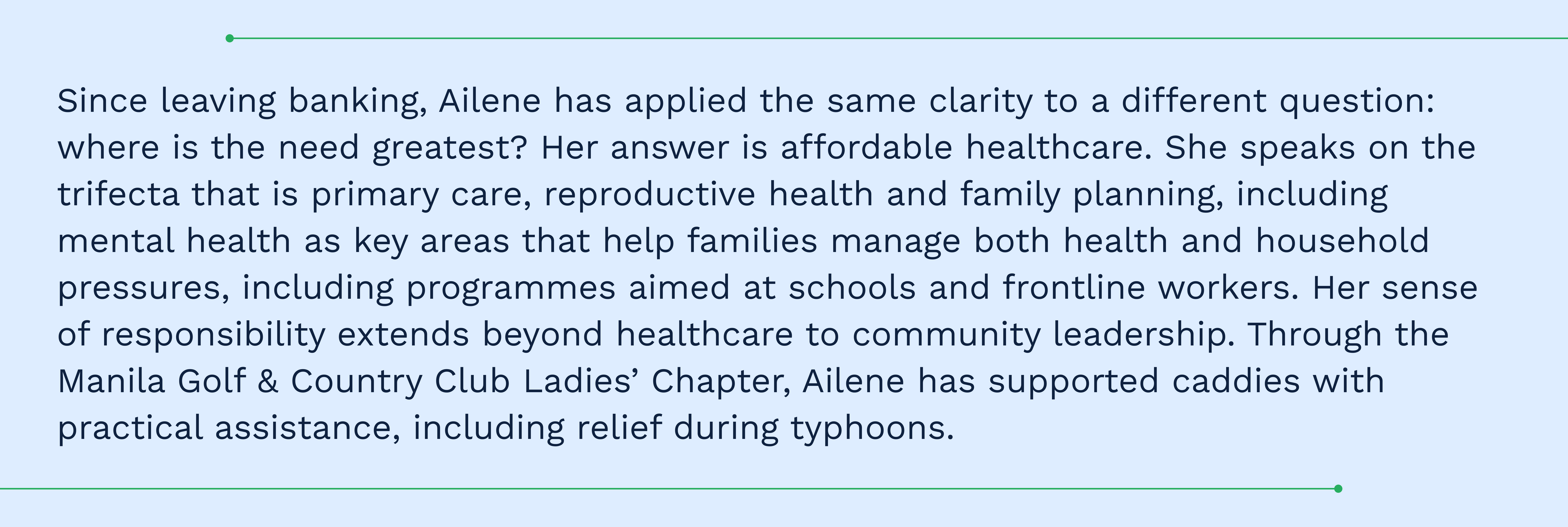
You are now involved in sustainability advocacy and are a forest and mangrove restoration pioneer. What does that work actually involve, and how did you get drawn into it?
After retiring, I wanted to give back. In this particular case, it is about leaving a legacy for our children and grandchildren by helping to preserve Mother Earth. I act as an Advisor for relationships for a Tokyo-based company called Futures Inc. I was able to originate an advisory and project deal with a family from the province who wanted to undertake reforestation and mangrove restoration on a 40-hectare private property. He wants to showcase this as a model that other provinces can emulate.
To help assuage the cost, Futures Inc. was able to secure a local airline for an offtake agreement linked to carbon credits. I think the important takeaway is that, as an emerging market with natural environments and a Blue Economy, the Philippines has an asset when it comes to contributing to carbon-emission reduction.
When you think about legacy for your own family and children now, how does that compare to how you counselled clients on the same question for decades?
This is a very interesting question. We live in extraordinary times, with technology and artificial intelligence (AI) accelerating at a pace where it is close to recursive self-improvement. At this juncture, reiterating morals and values is paramount.
As a mother, I always look at the unique persona of each of my three children and counsel them on the merits of family harmony and respect for one another, in a language that will be effective for each of them.
They are the third generation, so their task is to grow and preserve what is left for them responsibly, so that the generations after them can continue to benefit from the fruits of what their grandfather started. This requires discipline, hard work, as well as balancing the portfolio through diversification and risk-mitigating tools.
The difference is really in the method of communication. With this generation, I think it is important to lead by example and role-model the ethos: ‘Your word is your bond.’ Credibility is key, as is having gravitas and being trustworthy, so that integrity is something you demonstrate consistently.
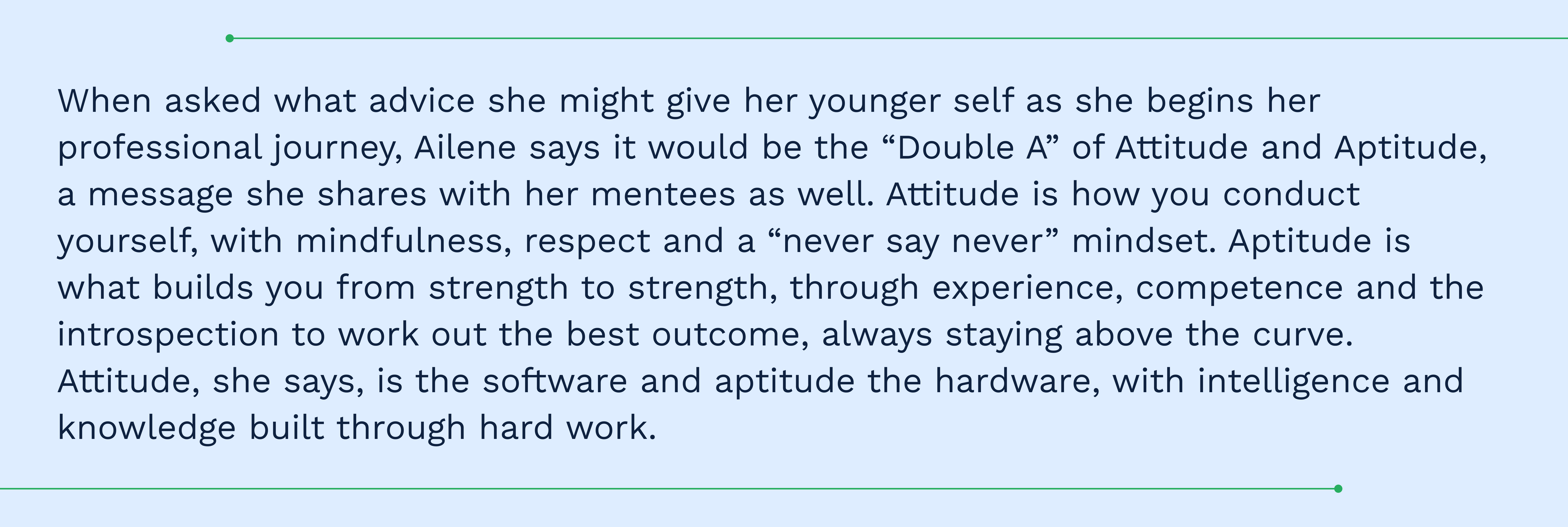
What's a skill or hobby that you have picked up recently that would surprise people?
I recently tried ceramic-making. It was interesting to see how, with three basic ingredients — clay, water and paint-colour — you can create something beautiful with your hands. Waiting for that last step, baking it in the furnace and finally seeing the finished product, is very exciting.
’Twas fun indeed!

Through every chapter of her journey, from banking to the causes she champions today, Ailene has held to one principle: that one’s word is one’s bond. Her story is not only one of professional achievement but of steady conviction, showing that trust is earned through curiosity, discipline and a genuine desire to be of service. Whether guiding families through the transfer of wealth, supporting affordable healthcare or advising on a reforestation and mangrove restoration project, she has always looked ahead to the generations who will inherit the results. In doing so, she reminds us that what lasts is the example we set and the values we pass on.



Investment involves risk. Past performance is not necessarily a guide to future performance or returns. The value of investments and the income from them can go down as well as up, and you may not get the full amount you invested. Rates of exchange may cause the value of investments to go up or down.
Any forward-looking statements, prediction, projection or forecast on the economy, stock market, bond market or economic trends of the markets contained in this material are subject to market influences and contingent upon matters outside the control of Helicap Pte. Ltd. (“Helicap”) and therefore may not be realised in the future. Further, any opinion or estimate is made on a general basis and subject to change without notice. In presenting the information above, none of Helicap, its affiliates, directors, employees, representatives or agents have given any consideration to, nor have made any investigation of the objective, financial situation or particular need of any user, reader, any specific person or group of persons. Therefore, no representation is made as to the completeness and adequacy of the information to make an informed decision. You should carefully consider (i) whether any investment views and products/ services are appropriate in view of your investment experience, objectives, financial resources and relevant circumstances. You may also wish to seek financial advice through a financial advisor or and independent legal, accounting, regulatory or tax advice, as appropriate.